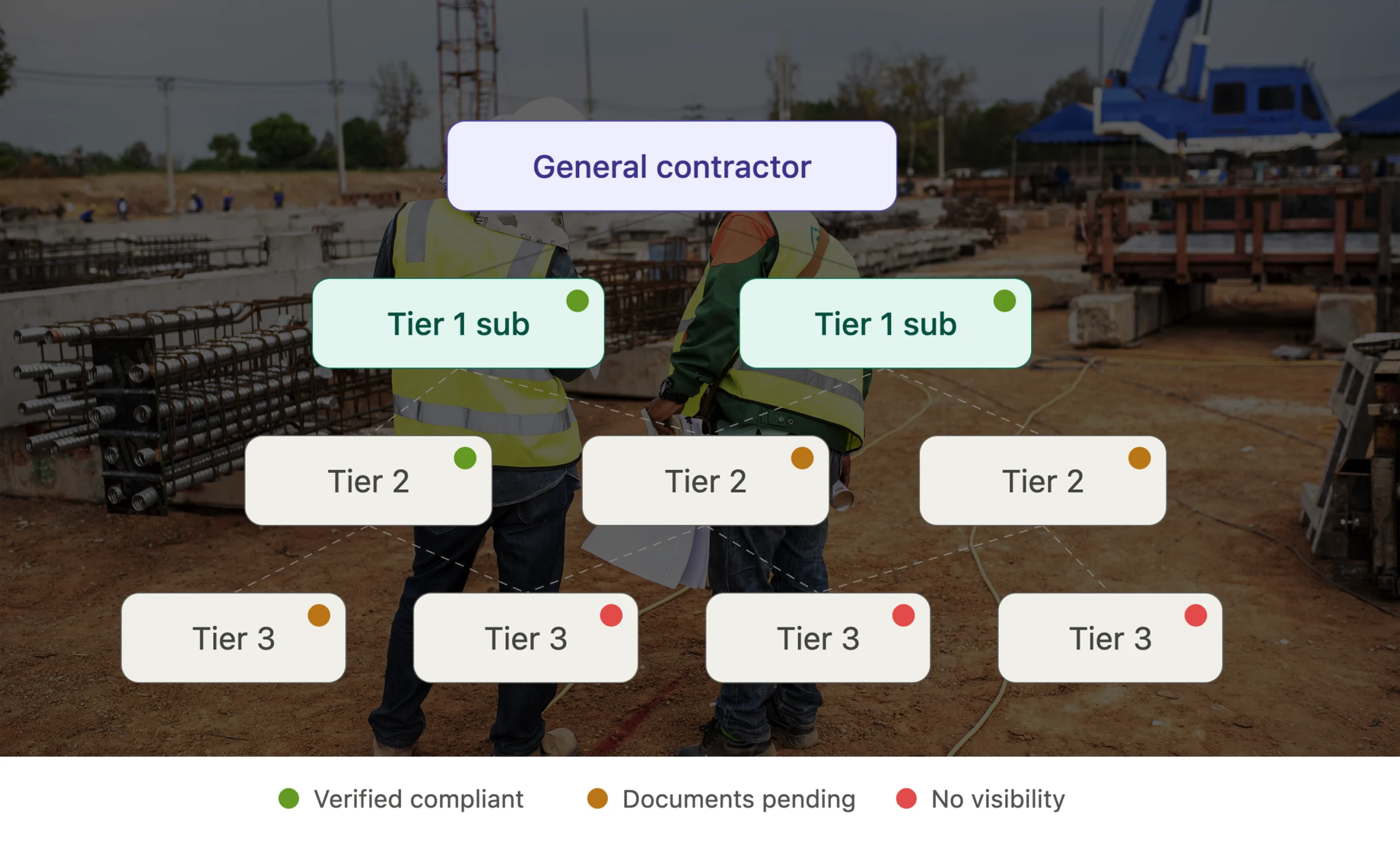

Contractor compliance only works when requirements are consistently applied in the field.
Organizations can build strong prequalification processes, validate safety and insurance information, and establish clear contractor requirements, but those efforts lose value if contractors are allowed to begin work before approval or if different projects and locations enforce the program differently.
Effective contractor compliance enforcement does not have to create unnecessary delays. The goal is to establish a process that makes contractor status clear, defines who is responsible for acting on that status, and gives operations enough visibility to make timely decisions.
When enforcement is built into normal operational processes, contractor compliance becomes easier to manage rather than another obstacle teams have to work around.
What Does Contractor Compliance Enforcement Mean?
Contractor compliance enforcement is the systematic practice of verifying and maintaining established safety, insurance, and workforce qualifications across all projects and sites before work begins. It ensures organizational standards are consistently applied in the field, preventing unauthorized or unvetted contractors from mobilizing.
That generally includes:
- Requiring contractors to complete prequalification before beginning applicable work
- Confirming required safety, insurance, and workforce information is current
- Preventing unresolved compliance issues from being ignored
- Applying requirements consistently across projects, locations, and contractor groups
- Defining how exceptions are reviewed, approved, and documented
OSHA’s Recommended Practices for Safety and Health Programs similarly emphasize coordination between host employers and contractors before work begins, including defining responsibilities, communicating hazards, and ensuring contractors meet established safety qualifications.
The objective is not to create unnecessary barriers. It is to ensure the requirements an organization has established are meaningful in practice.
A compliance requirement that is routinely bypassed cannot function as a reliable control.
Start With Clear Contractor Requirements
Consistent enforcement begins with requirements that contractors and internal teams can understand.
Organizations should establish a defined baseline of contractor requirements while allowing additional requirements to reflect the work being performed, its risk level, and applicable site conditions.
This distinction matters.
A contractor performing routine office services should not necessarily be evaluated against the same requirements as a contractor performing confined space entry, electrical work, or work at height. At the same time, contractors working for the same organization should still encounter a consistent underlying compliance standard.
Clear requirements help answer three practical questions:
- What does the contractor need to complete?
- Why does the requirement apply?
- What happens if the requirement is not met?
When those answers are clear, enforcement becomes much easier for contractors, procurement teams, safety professionals, and operations.
Make Approval a Real Operational Gate
One of the most important contractor compliance controls is also one of the simplest:
Contractors should not begin applicable work until required prequalification and approval are complete.
That standard has to exist outside the compliance department.
Project managers, site leadership, procurement, security, and other operational teams should know how to confirm contractor status before work begins.
The specific control will vary by organization. It might involve:
- A contractor approval status within the compliance platform
- A purchase-order or procurement hold
- Site access authorization
- A contractor roster reviewed before mobilization
- Coordination between safety, procurement, operations, and security
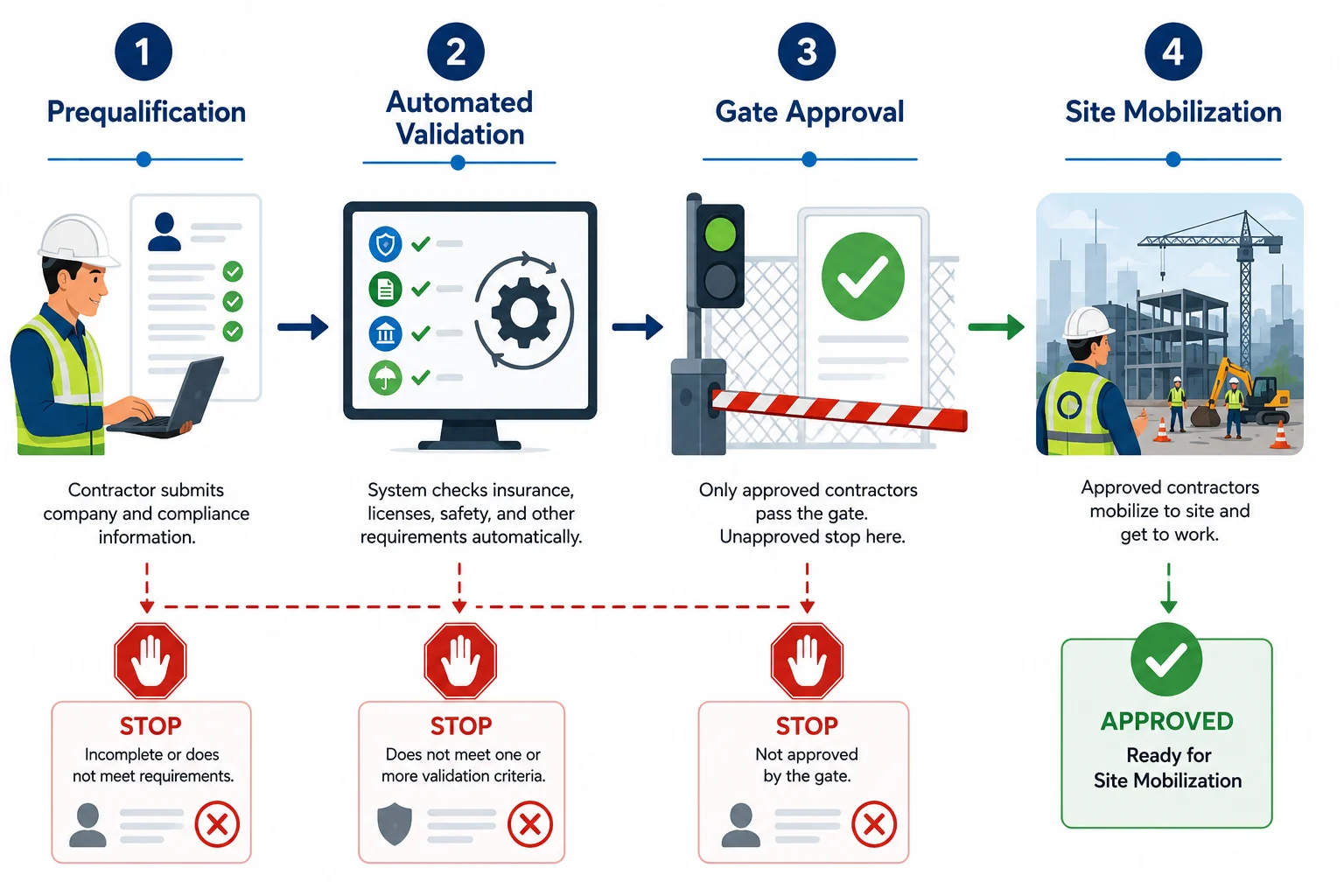
The technology is less important than the operating rule: the organization should have a dependable way to identify whether a contractor is approved before work starts.
Avoid Making Contractor Compliance Optional
A contractor compliance program can become difficult to manage when inconsistent enforcement allows required registration or prequalification to be applied differently across locations or business units.
This often appears at the site or business-unit level. One location may require every applicable contractor to complete the established process, while another location may allow contractors to begin work through a manual or informal workaround.
The result is effectively two programs:
- Contractors following the formal compliance process
- Contractors being managed outside of it
That can make it difficult to maintain consistent visibility and determine whether the same standards are being applied throughout the organization.
A stronger approach is to establish a common organizational standard and clearly define any legitimate exceptions.
If an exception is necessary, it should be intentional, documented, time-limited where appropriate, and approved by someone with the authority to accept the associated risk.
Build Enforcement into Site Access
Access control can be one of the most practical ways to connect contractor compliance with daily operations.
When applicable, site access processes can be aligned with contractor approval status so that workers and companies with unresolved requirements are identified before they begin work.
This does not necessarily mean every organization needs an automated gate system. The control can be as simple or sophisticated as the operation requires.
Examples include:
- Approved-contractor lists
- Badge or credential checks
- Security desk verification
- Digital status checks
- Project mobilization reviews
The important point is that contractor status should be visible to the people responsible for allowing work to begin.
A compliance system that only the compliance team can see is difficult to enforce operationally.
Keep Expirations from Becoming Background Noise
Contractor approval is not permanent.
Insurance policies expire. Training certifications require renewal. Safety information changes. Contractors may add employees, subcontractors, or new scopes of work.
An effective enforcement process therefore needs to address what happens when previously approved information becomes outdated.

Programs should define:
- Which expirations affect approval status
- How contractors are notified
- How much notice is provided before expiration
- Who can see unresolved deficiencies
- Whether work can continue while an item is being corrected
- Who has authority to approve an exception
The objective should be predictable enforcement rather than surprise enforcement.
Contractors are more likely to respond effectively when they understand what is expiring, what is required, and how to resolve the issue.
Give Operations Visibility Before Problems Develop
Operations teams are often responsible for delivering the work, so contractor compliance cannot operate separately from them.
If site and project leaders only learn that a contractor is non-compliant when a crew arrives at the gate, the program is likely to create unnecessary disruption.
Better visibility allows teams to identify issues earlier.
Useful information may include:
- Contractors approaching expiration
- Contractors with incomplete prequalification
- Outstanding insurance deficiencies
- Missing worker qualifications
- Contractors awaiting review
- Approved exceptions and their expiration dates
This allows operations to plan around compliance rather than react to it.
The goal is not to weaken the standard to protect productivity. It is to resolve compliance issues early enough that the standard and the schedule can both be maintained.
Define Ownership Across the Organization
Enforcement is difficult when everyone assumes someone else owns it.
A contractor compliance program typically involves several functions, and each needs a defined role.
Procurement may ensure contractors enter the prequalification process before work is awarded.
Safety and risk teams may review contractor information and establish qualification standards.
Operations and project teams may confirm approval before mobilization and monitor work in the field.
Security or access-control teams may confirm authorization before workers enter a site.
Executive leadership may support policy decisions and ensure requirements are applied consistently across business units.
The exact structure will vary by organization, but ownership should not. Clear governance makes enforcement more consistent and reduces last-minute disagreements over who can approve, hold, or release a contractor.
For a broader look at contractor compliance governance, including roles, decision-making authority, and program ownership, see the Contractor Compliance Best Practices Guide.
Create a Practical Exception Process
Strong enforcement does not mean pretending exceptions will never occur.
There may be legitimate operational situations where an organization needs to evaluate whether work can proceed while a specific issue is being resolved.
The mistake is allowing informal exceptions to become the normal process.
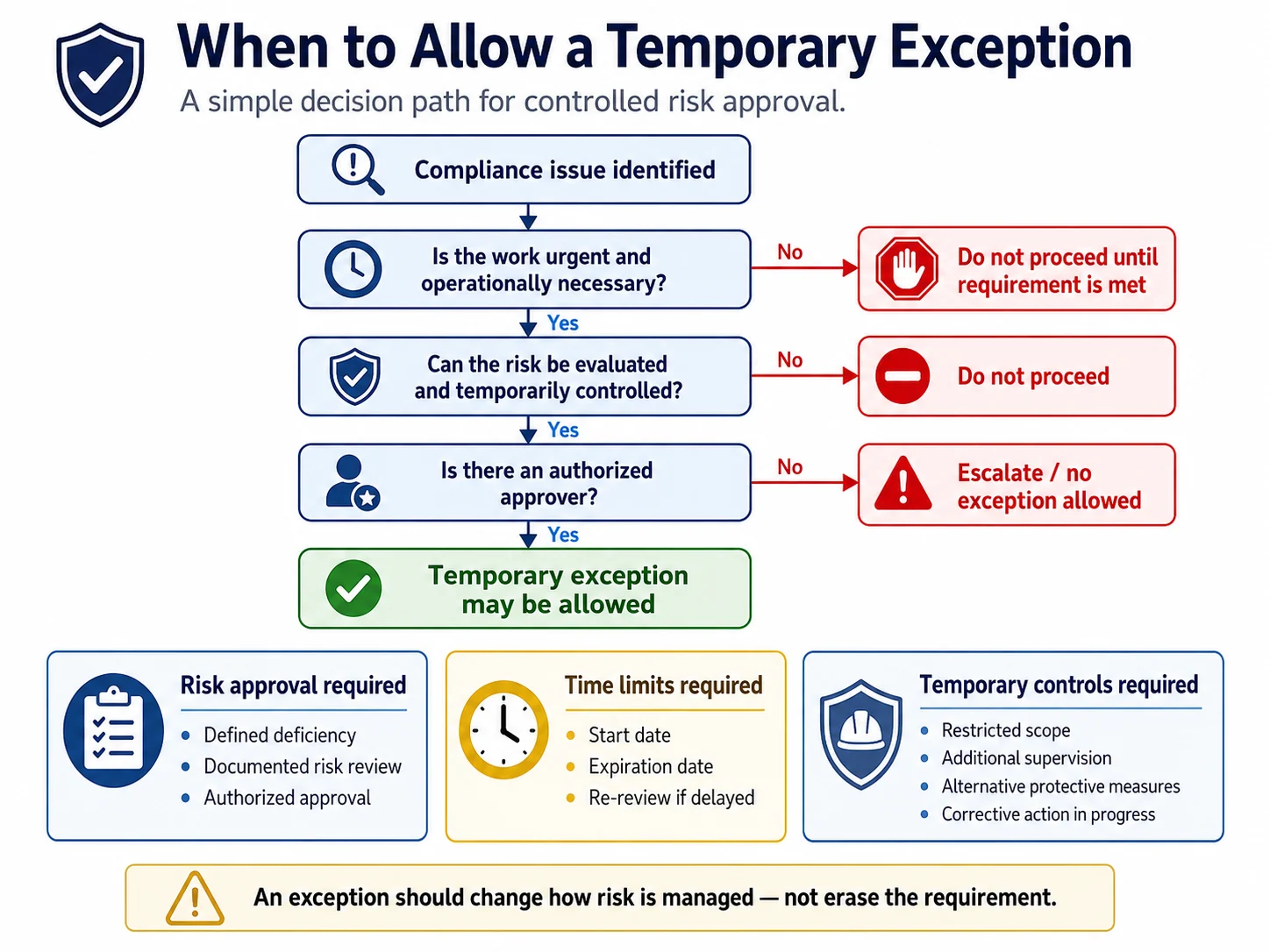
A structured exception process should identify:
- The specific requirement that has not been met
- Why an exception is being requested
- The risk associated with proceeding
- Any temporary controls required
- Who has authority to approve the exception
- How long the exception remains valid
- What must occur before normal approval is restored
An exception should change how the risk is managed, not erase the underlying requirement.
Documented exceptions create accountability while giving organizations a practical way to manage unusual circumstances.
Support Contractors Through the Process
Enforcement and contractor support are not competing ideas.
In fact, clear support often makes enforcement easier.
Contractors should be able to understand:
- What is required
- Why a submission was rejected or found deficient
- What information needs to be corrected
- When documentation expires
- Who to contact when they need help
A contractor that understands the requirement has a better chance of resolving it correctly the first time.
This is particularly important for smaller contractors that may not have dedicated compliance personnel. Providing clear instructions and access to knowledgeable support can improve participation without lowering the organization’s standards.
Measure Whether Enforcement Is Working
Organizations should also evaluate whether contractor compliance requirements are actually being followed.
Useful measures may include:
- Percentage of contractors approved before work begins
- Number of contractors working under exceptions
- Frequency of expired documentation during active work
- Time required to resolve deficiencies
- Variations in compliance rates across locations
- Contractors mobilized before completing required prequalification

These metrics can help identify whether a challenge is related to contractor behavior, internal processes, unclear requirements, or inconsistent site-level enforcement. They can also serve as leading indicators of whether the compliance process is operating as designed, rather than relying solely on incidents or other lagging safety outcomes.
The goal is improvement, not simply reporting.
Enforcement Should Support Operations, Not Compete With Them
The strongest contractor compliance programs do not force organizations to choose between compliance and productivity.
They create processes that allow both to work together.
That means establishing clear requirements, identifying issues before mobilization, making contractor status visible to operational teams, providing contractors with practical support, and applying standards consistently across the organization.
When those pieces are in place, enforcement becomes less about stopping work and more about making sure the right contractors are ready to work when the project needs them.
For a broader look at prequalification, governance, insurance monitoring, workforce qualifications, and the full contractor compliance lifecycle, see the Contractor Compliance Best Practices Guide.