
Contractor Compliance Management: How to Build a Program That Works
Organizations that rely on contractors face a constant operational challenge: ensuring every contractor working on a project meets safety, insurance, and regulatory requirements. Without a structured contractor compliance program, companies expose themselves to serious risks including workplace incidents, uninsured losses, regulatory penalties, and reputational damage.
Contractor compliance best practices provide a framework for preventing these issues before work begins and ensuring standards are maintained throughout the contractor relationship.
This guide provides a comprehensive overview of contractor compliance best practices and outlines a practical framework organizations can use to build, improve, and scale an effective contractor compliance program. It is designed for safety, risk, and procurement leaders responsible for managing contractor compliance programs and reducing contractor-related risk.
Contractor Compliance Best Practices Framework
An effective contractor compliance program combines multiple operational components that work together to reduce contractor risk and maintain regulatory oversight.
Organizations that successfully manage contractor compliance typically implement a structured framework that includes:
- Contractor prequalification before work begins
- Subcontractor visibility and oversight
- Safety documentation review and program validation
- Insurance compliance monitoring
- Workforce training and certification tracking
- Financial qualification for large or high-risk projects
- Clear enforcement policies for non-compliant contractors
- Defined governance and organizational ownership
- Compliance performance metrics and reporting
- Technology platforms that centralize contractor data
Together, these elements create a contractor compliance program that improves risk visibility, strengthens contractor accountability, and supports safe and compliant project execution.
The sections below explain each component and outline contractor compliance best practices organizations can use to build an effective program.
What Is Contractor Compliance?
Contractor compliance refers to the process of ensuring third-party contractors meet the safety, insurance, training, and operational requirements necessary to perform work for an organization.
A contractor compliance program typically requires contractors to provide documentation such as:
- Safety programs and policies
- OSHA incident records
- Certificates of Insurance (COIs)
- Worker certifications and training records
- Workforce qualifications
- Licenses and regulatory documentation
The goal is not simply to collect documents but to validate that contractors are capable of performing work safely and responsibly.
Effective contractor compliance programs typically address three key objectives:
Risk Reduction
Ensuring contractors operate safely reduces workplace incidents and liability exposure.
Regulatory Compliance
Many industries must demonstrate contractor oversight to regulators and auditors.
Operational Consistency
Standardized requirements create consistent expectations for all contractors.
Without a structured program, organizations often rely on manual processes that make it difficult to maintain oversight across hundreds or thousands of contractors.

Why Contractor Compliance Programs Fail
Despite good intentions, many contractor compliance programs fail to deliver meaningful oversight. The failure is rarely due to a lack of policies; it typically stems from structural and operational issues.
Common reasons contractor compliance programs fail include:
Improve Your Contractor Compliance Program
Many contractor compliance programs struggle due to manual processes, inconsistent enforcement, and lack of visibility. Modern compliance platforms help organizations centralize contractor data, validate documentation, and maintain ongoing compliance.
Contractor Prequalification Best Practices
Effective contractor prequalification ensures contractors are evaluated before work begins based on safety performance, insurance coverage, and workforce qualifications.
Contractor prequalification refers to the process of evaluating contractors before they begin work to determine whether they meet an organization’s safety, insurance, and operational standards.
Prequalification typically evaluates:
- Safety performance
- Insurance coverage
- Experience and qualifications
- Workforce training
- Operational capabilities
Prequalification helps organizations identify risk early rather than reacting to issues after work has started.
Key Components of Contractor Prequalification
A strong prequalification process usually includes:
Safety Documentation Review
Contractors submit safety programs, policies, and incident history to demonstrate their safety practices.
Insurance Validation
Organizations confirm contractors carry adequate coverage and list the hiring company as an additional insured where required.
Workforce Qualification Review
Certifications and licenses are validated to ensure workers are qualified to perform the work.
Scope-Specific Requirements
Requirements should match the type of work being performed. For example:
- Electrical contractors require different documentation than landscaping vendors.
- High-risk work may require additional safety documentation.
Prequalification allows organizations to determine who is approved to work before risk is introduced to the jobsite.
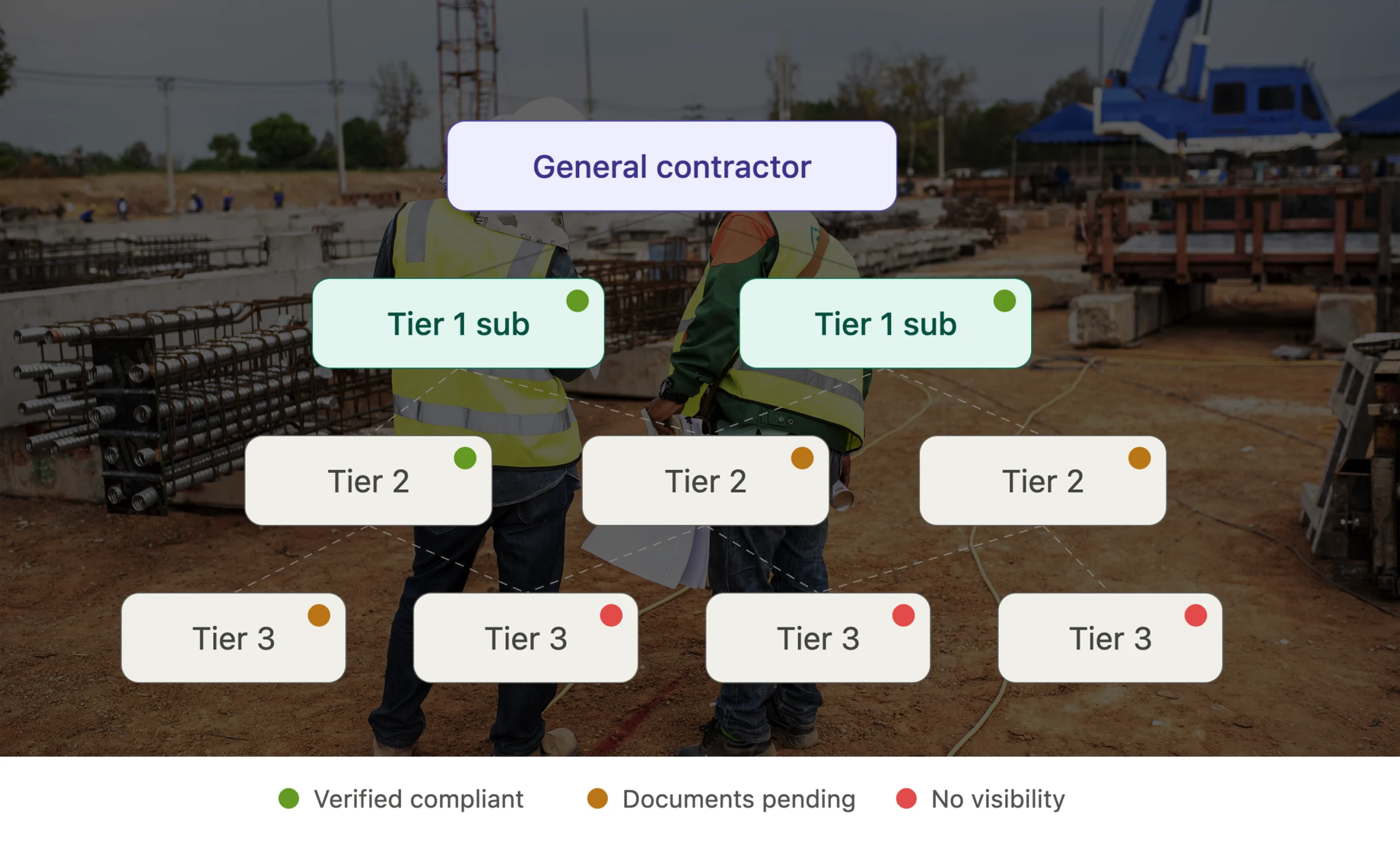
Subcontractor Compliance Best Practices
Many companies focus on contractor compliance but overlook subcontractors.
However, subcontractors frequently perform a significant portion of the work, especially in construction, manufacturing, and energy industries.
Without subcontractor compliance oversight, organizations face several risks:
- Unknown workers entering worksites
- Uninsured subcontractors
- Unqualified personnel performing specialized work
Best practices include:
Require Prime Contractors to Disclose Subcontractors
Prime contractors should identify all subcontractors performing work.
Apply the Same Compliance Standards
Subcontractors should meet the same safety and insurance requirements as prime contractors.
Maintain Centralized Visibility
A centralized compliance system ensures organizations know which companies and workers are present on their projects.
Subcontractor oversight closes one of the most common compliance gaps.

Contractor Safety Documentation Best Practices
Safety documentation is a cornerstone of contractor compliance.
Typical documentation requirements include:
- Safety manuals
- Hazard communication programs
- Lockout/tagout procedures
- Fall protection plans
- Incident reporting procedures
- OSHA 300 and 300A logs
However, simply collecting documents is not enough.
Safety Documentation Best Practices
Relevance-Based Review
Safety documentation should match the work being performed. A contractor performing office cleaning should not be required to submit complex construction safety programs.
Program Implementation Checks
Organizations should confirm that submitted programs are actually implemented in the field.
Regular Updates
Safety documentation should be reviewed periodically to ensure it reflects current operations and regulatory requirements.
This process helps organizations ensure contractors have real safety programs rather than template documents.
Insurance Monitoring Best Practices
Effective insurance monitoring requires validating coverage, tracking policy expirations, and ensuring contractors maintain required insurance throughout the duration of work.
Contractors typically must maintain several types of insurance, including:
- General Liability
- Workers’ Compensation
- Automobile Liability
- Umbrella or Excess Liability
Certificates of Insurance (COIs) provide proof of coverage, but monitoring insurance manually can be extremely difficult.
Insurance Monitoring Best Practices
Validate Coverage Requirements
COIs should be reviewed to ensure:
- Correct coverage limits
- Appropriate policy types
- Required endorsements
- Additional insured status where applicable
Track Expiration Dates
Insurance policies frequently expire during projects. Programs must track renewal deadlines.
Automated Notifications
Automated alerts notify contractors when policies are nearing expiration.
Continuous Monitoring
Insurance compliance should be maintained throughout the contractor relationship, not just during onboarding.
Effective insurance monitoring helps protect organizations from uninsured liability.
Financial Qualification for Large Contractors
For large projects, contractor compliance programs often extend beyond safety and insurance documentation to include financial qualification. Assessing a contractor’s financial stability helps organizations reduce the risk of project disruption caused by:
- contractor insolvency
- cash flow issues
- operational instability
While insurance provides protection against many types of loss, it does not eliminate all financial risk.
For example:
- Insurance policies may include large deductibles
- Coverage limits may not fully cover project exposure
- Claims can take significant time to resolve
- Some losses may fall outside policy coverage
Reviewing contractor financials helps organizations understand whether contractors have the financial capacity to absorb these gaps.
Why Financial Qualification Matters on Large Projects
On major capital projects, the financial health of contractors becomes especially important. If a contractor encounters financial difficulties during a project, the consequences can include:
- Work stoppages
- Project delays
- Unpaid subcontractors
- Legal disputes
- Increased replacement costs
Evaluating financial capacity helps ensure contractors have the resources required to complete the work they are awarded.
Typical Financial Information Collected
Contractor financial qualification typically involves reviewing documentation such as:
- Financial statements
- Balance sheets
- Income statements
- Credit references
- Bonding capacity (where applicable)
- Banking relationships
This information helps organizations assess whether contractors have sufficient financial strength to support the scope and scale of the work.
Financial Reviews as a Risk Mitigation Layer
Organizations gain a more complete picture of contractor risk before awarding work by evaluating multiple factors together, including:
- Safety documentation
- Insurance validation
- Workforce qualifications
- Financial stability review
For complex or high-value projects, financial qualification helps ensure contractors are not only capable of performing the work safely but also financially capable of completing the project successfully.
Contractor Training and Workforce Requirements
Many industries require contractors to maintain specific workforce training.
Examples include:
- OSHA 10 or OSHA 30
- Site-specific safety training
- Equipment certifications
- Environmental training
- Industry-specific qualifications
Tracking training manually across multiple contractors can quickly become unmanageable.
Training Compliance Best Practices
Centralized Certification Tracking
Maintain records of all contractor training certifications.
Expiration Monitoring
Training certifications often expire and require renewal.
Worker-Level Compliance
Contractor compliance should track individual worker credentials, not just company-level documents.
Site-Specific Requirements
Some worksites require additional training or badging before workers can enter.
Workforce compliance ensures that workers performing specialized tasks are properly trained and qualified.
Best Practices for Enforcing Contractor Compliance
Effective contractor compliance enforcement ensures that only approved contractors perform work and that compliance requirements are consistently applied across all projects.
Organizations must establish clear policies regarding compliance status and work authorization.
Key Enforcement Practices
No Work Without Approval
Contractors should not begin work until they are fully compliant.
Access Controls
Non-compliant contractors should be restricted from entering worksites.
Expiration Enforcement
Expired documentation should trigger compliance holds until updates are submitted.
Executive Support
Leadership support is critical for enforcing compliance consistently.
When enforcement is consistent, contractors quickly recognize that compliance requirements are non-negotiable.
Contractor Compliance Program Governance
Clear governance ensures contractor compliance programs are consistently managed, enforced, and supported across the organization.
One of the most common reasons contractor compliance programs struggle is the absence of clear governance. Without defined ownership, compliance responsibilities often become fragmented across departments.
An effective contractor compliance program requires clearly defined roles that ensure accountability across the organization.
Key Roles in Contractor Compliance Governance
Executive Leadership
Senior leadership sets the tone for contractor compliance by establishing policies and expectations. When executives prioritize contractor compliance, it signals that safety, insurance requirements, and workforce qualifications are non-negotiable.
Leadership involvement typically includes:
- Establishing contractor compliance policies
- Approving program standards
- Supporting enforcement decisions
- Ensuring compliance resources are available
Executive alignment is critical for ensuring compliance requirements are applied consistently across projects and business units.
Procurement and Supply Chain
Procurement teams often play a central role in contractor onboarding and vendor management. As a result, they frequently serve as a primary gatekeeper for contractor compliance.
Procurement responsibilities may include:
- Communicating compliance requirements to contractors
- Coordinating contractor onboarding
- Ensuring compliance approval before awarding work
- Managing contractor records within compliance systems
When procurement teams are integrated into the compliance process, organizations reduce the risk of contractors being engaged before completing required reviews.
Safety and Risk Management
Safety and risk professionals are typically responsible for evaluating safety programs and monitoring contractor incident performance.
Their responsibilities may include:
- Reviewing contractor safety documentation
- Evaluating OSHA incident data
- Monitoring contractor safety performance
- Investigating contractor-related incidents
Safety teams help ensure contractor compliance programs focus not only on documentation but also on actual safety practices.
Project and Operations Teams
Project managers and operations personnel are responsible for ensuring only approved contractors perform work.
Their role in contractor compliance often includes:
- Confirming contractor approval status before work begins
- Monitoring contractor performance in the field
- Reporting safety or compliance issues
- Preventing non-compliant contractors from accessing worksites
Operational enforcement is where contractor compliance programs ultimately succeed or fail.
Centralized Compliance Oversight
Many organizations also establish a centralized contractor compliance function responsible for program administration. This team may coordinate documentation reviews, manage compliance platforms, and maintain compliance standards.
Centralized oversight helps ensure the contractor compliance program operates consistently across projects and locations.

Contractor Compliance Program Metrics and Performance
Effective contractor compliance programs measure performance to ensure the program is functioning as intended. Without clear metrics, organizations can struggle to identify gaps demonstrate program value.
Common contractor compliance metrics include:
- Percentage of contractors fully compliant before work begins
- Insurance policy expiration compliance rates
- Average contractor onboarding time
- Number of expired safety or training documents
- Contractor incident and safety performance trends
Tracking these indicators helps organizations identify process bottlenecks, improve contractor onboarding, and maintain stronger oversight across their contractor base.
The Contractor Compliance Program Lifecycle
Contractor compliance should not be viewed as a one-time onboarding activity. Instead, it is a lifecycle that begins before work starts and continues throughout the contractor relationship.
A typical contractor compliance lifecycle includes:
- Prequalification: collecting, reviewing, and validating contractor documentation, including safety programs, insurance, and workforce qualifications, to determine whether a contractor is approved to perform work
- Onboarding: activating approved contractors by assigning them to projects, confirming site-specific requirements, and granting access to begin work
- Active Monitoring: tracking insurance renewals, training certifications, and safety performance throughout the contractor relationship
- Field Oversight: ensuring contractors follow site safety and operational requirements while work is being performed
- Project Closeout: maintaining documentation and performance records for audit, compliance, and future evaluation
Managing compliance as a continuous lifecycle helps organizations maintain visibility and control throughout the duration of contractor engagement.
Technology Platforms for Contractor Compliance
Effective contractor compliance requires more than collecting documents—it requires validating information and maintaining ongoing oversight.
Contractor compliance platforms enable organizations to centralize contractor data, validate submissions, and monitor compliance continuously across the contractor lifecycle.
However, not all programs operate with the same level of consistency or oversight. In many organizations, contractor compliance processes still include gaps such as:
- Inconsistent requirements across contractor groups, where smaller contractors are managed outside of formal systems or through manual processes
- Safety documentation that does not reflect the actual work being performed, leading to programs that exist on paper but are not implemented in practice
- Overly complex submission processes that require third-party assistance, increasing contractor costs and introducing inaccuracies
- Limited support for contractors, making it difficult to resolve issues or submit accurate information
These challenges often result in compliance programs that appear complete on paper but lack consistency and reliability in practice.
As contractor populations grow, these challenges make it difficult to maintain accurate, consistent, and scalable compliance programs.
More mature contractor compliance programs rely on platforms that support structured review processes, ongoing monitoring, and centralized visibility—helping organizations ensure contractor data is accurate, relevant, and continuously maintained.
These platforms support contractor compliance programs by:
- Centralizing contractor records and requirements
- Validating safety, insurance, and workforce documentation
- Automating document collection and renewal tracking
- Monitoring compliance continuously, not just at onboarding
- Providing dashboards and reporting for compliance visibility
Technology platforms also improve contractor experience by providing a single portal where contractors can submit documentation and track their status.
The right platform can transform contractor compliance from a fragmented administrative task into a structured risk management program.
Common Contractor Compliance Mistakes
Even organizations with established compliance programs often encounter challenges that limit effectiveness.
Some of the most common contractor compliance mistakes include:
- Relying on manual spreadsheets and email tracking, or static PDF-based prequalification forms, limiting visibility and increasing the risk of missed expirations
- Lacking clearly defined and standardized contractor compliance requirements
- Collecting documentation without validating accuracy, relevance, or completeness
- Applying uniform requirements without accounting for work scope or risk level, or overloading contractors beyond a defined baseline standard
- Allowing contractors to begin work before compliance approval is complete
- Failing to enforce compliance requirements consistently during active work
- Failing to monitor insurance, training, and other time-sensitive requirements
These gaps often result in compliance programs that appear structured but lack consistency, enforcement, and reliable oversight in practice.
Recognizing these common issues allows organizations to strengthen their contractor compliance programs and avoid operational risks that arise from incomplete oversight.
Audit Readiness and Regulatory Defense
Contractor compliance programs play a critical role in audit readiness by helping organizations maintain validated records and demonstrate due diligence during reviews, inspections, and investigations.
Many industries must demonstrate that they actively manage contractor safety and qualifications, including maintaining validated records of:
- Contractor safety programs
- Insurance coverage
- Workforce qualifications
- Compliance approvals
A well-structured contractor compliance program helps organizations demonstrate due diligence when facing regulatory reviews or incident investigations.
Federal OSHA and Workplace Safety Oversight
Regulatory agencies including Fed OSHA evaluate how companies manage contractor safety, particularly when incidents occur on shared worksites.
During an investigation, regulators may request documentation including:
- Contractor safety programs
- OSHA incident records
- Worker training certifications
- Site-specific safety plans
- Contractor approval documentation
Organizations that maintain structured contractor compliance records can demonstrate that contractor qualifications were evaluated prior to work being performed.
This documentation supports the organization’s ability to show that reasonable steps were taken to ensure contractors were capable of performing work safely.
MSHA and High-Risk Industries
Industries such as mining and heavy industrial operations face additional regulatory oversight from agencies like the Mine Safety and Health Administration (MSHA).
In these environments, contractor compliance programs often include:
- Mine-specific safety training verification
- Contractor safety history evaluation
- Worker qualification tracking
- Documentation of contractor approvals
Maintaining accurate contractor compliance records helps organizations demonstrate regulatory compliance and preparedness for inspections.
Client and Third-Party Audits
Many organizations must also demonstrate contractor compliance to their own customers. Client and third-party audits frequently require documentation proving that contractors meet safety and insurance standards.
These audits may review:
- Contractor prequalification records
- Insurance compliance documentation
- Safety program reviews
- Workforce training verification
- Compliance approval history
Organizations with structured contractor compliance systems can respond quickly to these requests and provide clear documentation of their compliance processes.
Documentation as a Defensive Asset
When incidents, audits, or regulatory reviews occur, contractor compliance records become critical evidence of how contractors were evaluated, approved, and managed.
Organizations should maintain validated records of:
- Contractor safety programs
- Insurance coverage
- Workforce qualifications
- Compliance approvals
These records are often requested during:
- OSHA or MSHA investigations
- Client and third-party audits
- Internal incident reviews
- Insurance or legal proceedings
Maintaining accurate and validated documentation helps demonstrate that contractors were properly evaluated before work began and that compliance requirements were enforced throughout the contractor lifecycle.
Strong documentation practices ensure these records can be used during audits, investigations, and incident reviews – rather than simply stored for administrative purposes.
How to Build an Effective Contractor Compliance Program
Building an effective contractor compliance program requires more than defining requirements, it requires a structured approach that aligns evaluation, enforcement, and ongoing monitoring.
In practice, successful programs are built in stages, beginning with clear expectations and expanding into a fully managed compliance lifecycle.
Many organizations attempt to build contractor compliance programs by layering requirements onto existing processes, but without structure, these programs often become difficult to enforce and scale.
Organizations typically build effective contractor compliance programs by:
- Defining clear, standardized compliance requirements that establish a baseline across all contractors, while allowing for scope- and risk-based adjustments
- Implementing a structured prequalification process to collect, review, and validate contractor safety, insurance, and workforce documentation before work is awarded
- Establishing subcontractor visibility and applying consistent requirements across all tiers of contractors performing work
- Evaluating safety programs and validating implementation, not just collecting documentation
- Implementing insurance monitoring processes to ensure coverage remains active and meets requirements throughout the duration of work
- Tracking workforce training and certifications at the worker level, including expiration and site-specific requirements
- Incorporating financial qualification for large or high-risk projects, where contractor financial stability can impact project execution
- Enforcing compliance requirements consistently, ensuring contractors are approved before work begins and remain compliant throughout active work
- Using technology platforms to centralize data, support validation, and maintain ongoing visibility across the contractor lifecycle
Effective contractor compliance programs are not built at once, they evolve over time as organizations standardize processes, improve enforcement, and increase visibility across their contractor base.
Organizations that follow this structured approach move beyond document collection and establish contractor compliance as a core component of risk management and operational performance.
Final Thoughts
Contractor compliance is no longer just an administrative task; it is a critical component of enterprise risk management and operational performance.
Organizations that rely on manual processes or inconsistent enforcement often struggle to maintain visibility across their contractor base, increasing exposure to safety, financial, and regulatory risks.
By implementing contractor compliance best practices—supported by structured prequalification, consistent enforcement, and ongoing monitoring—organizations can ensure contractors meet requirements before work begins and remain compliant throughout the contractor lifecycle.
Over time, mature contractor compliance programs move beyond document collection and become a reliable system for managing contractor risk, improving contractor performance, and supporting audit readiness.
Organizations that take a structured, lifecycle-based approach are better positioned to scale their contractor programs, maintain consistency across projects, and respond effectively when audits or incidents occur.
As contractor populations grow and regulatory expectations increase, structured contractor compliance programs become essential – not optional.
Strengthen Your Contractor Compliance Program
If your organization is looking to improve contractor compliance processes, reduce risk, and gain better visibility into contractor qualifications, the next step is evaluating how your current program is structured and where gaps may exist.
A more structured approach, supported by clear requirements, validation processes, and ongoing monitoring, can significantly improve consistency, reduce administrative burden, and strengthen overall compliance.
About the Author
This article was developed by the CanQualify team, which specializes in contractor compliance, prequalification, and risk management programs. CanQualify works with organizations to validate contractor safety, insurance, and workforce data while improving compliance visibility and operational efficiency.