
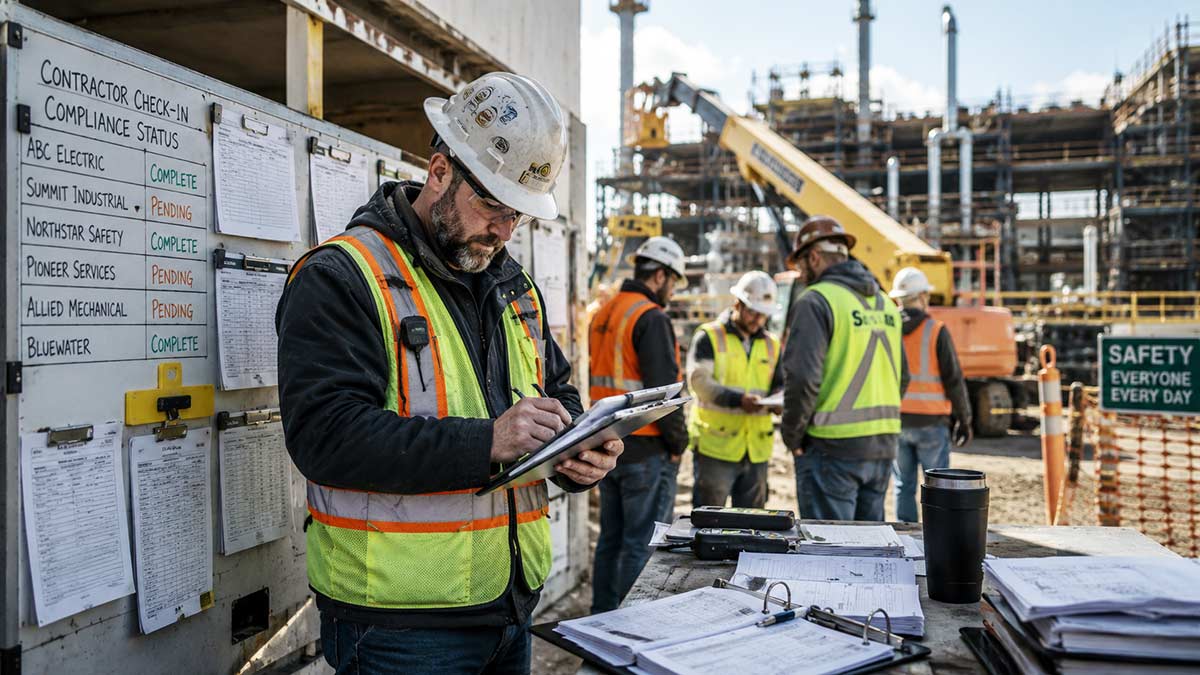
Contractor compliance programs are designed to reduce risk, improve oversight, and ensure contractors meet organizational requirements before work begins. However, many programs struggle to deliver consistent results, not because organizations lack policies, but because the underlying processes are difficult to scale, enforce, and maintain over time.
As contractor populations grow, organizations often discover that managing contractor compliance requires more than collecting documentation. Effective programs depend on structured processes, clear requirements, validation, and ongoing oversight.
Understanding why contractor compliance programs fail can help organizations identify operational gaps early and build stronger, more sustainable compliance processes.

1. Manual Processes Limit Visibility and Scalability
One of the most common reasons contractor compliance programs fail is reliance on manual processes such as spreadsheets, email tracking, and static PDF forms.
While these approaches may work for small contractor populations, they become increasingly difficult to manage as programs expand across multiple contractors, projects, and locations.
Common challenges with manual contractor compliance processes include:
- Missed insurance and training expirations
- Inconsistent contractor requirements
- Limited visibility into contractor status
- Duplicate or outdated records
- Delays in contractor onboarding
Manual systems also make it difficult for internal teams to maintain consistent oversight. Safety, procurement, operations, and project teams may all manage information separately, creating fragmented processes and inconsistent enforcement.
Structured contractor compliance programs improve visibility by centralizing contractor data, requirements, and documentation within a single system.
2. Collecting Documents Without Validation
Another major reason contractor compliance programs fail is treating compliance as a document collection exercise rather than a validation process.
Collecting documentation alone does not confirm that contractors meet organizational requirements or are prepared to perform work safely.
Examples of common issues include:
- Safety programs that do not reflect the work being performed
- Outdated or incomplete documentation
- Insurance certificates that do not meet contractual requirements
- Workforce qualifications that are expired or unverifiable
Without structured review processes, organizations may unintentionally create a false sense of compliance while important gaps remain unresolved.
Strong contractor compliance programs focus on validating documentation for:
- Accuracy
- Relevance
- Completeness
- Alignment with the contractor’s scope of work
This helps organizations maintain more reliable compliance data and improve overall contractor oversight.
3. Weak Enforcement Reduces Program Effectiveness
Even well-designed contractor compliance programs can become difficult to manage consistently when requirements are applied differently across projects, business units, or locations.
As organizations grow, contractor compliance processes often evolve at different speeds. One site may require contractors to complete prequalification before work begins, while another may manage contractors through a separate process or apply requirements differently based on operational needs.
Common enforcement gaps can include:
- Contractors beginning work before approval is fully completed
- Compliance requirements being treated as recommendations rather than operational standards
- Delays in resolving expired documentation
- Different contractor groups or locations following different compliance expectations
Over time, these inconsistencies can reduce program credibility making it more difficult to maintain standardized oversight, clear visibility, and consistent contractor compliance processes.
Organizations that establish clear enforcement standards and apply them consistently across all locations typically achieve stronger compliance visibility and more reliable contractor oversight.

4. Contractor Experience Impacts Compliance Consistency
Contractor compliance programs are most effective when they support both organizational oversight and contractor usability.
Programs that are overly complicated, difficult to navigate, or heavily dependent on manual communication can create unnecessary friction for contractors attempting to submit documents and maintain compliance.
Common contractor experience challenges include:
- Unclear or overly broad requirements
- Repetitive documentation requests
- Complex onboarding processes
- Limited access to timely support or guidance
- Difficulty tracking compliance status
- Delayed review and approval timelines
These issues can slow onboarding, create inaccurate submissions, and increase administrative workload for both contractors and internal teams.
Organizations that improve contractor experience often see improvements in:
- Submission accuracy
- Contractor participation
- Onboarding efficiency
- Overall compliance consistency
Clear communication, defined requirements, and centralized systems help contractors understand expectations and maintain compliance more effectively.
Contractor Compliance Requires Structure, Validation, and Oversight
Contractor compliance programs rarely struggle because organizations don’t care about safety or oversight. More often, challenges develop as contractor populations grow and compliance processes become more difficult to manage consistently across projects, locations, and contractor groups.
Organizations that build more effective contractor compliance programs typically focus on:
- Structured contractor prequalification
- Validation of safety, insurance, and workforce documentation
- Consistent enforcement practices
- Ongoing compliance monitoring
- Clear contractor communication and support
When these elements work together, contractor compliance becomes more than an administrative process, it becomes a structured system for managing contractor risk and maintaining operational consistency.
Improve Your Contractor Compliance Program
Organizations looking to strengthen contractor compliance processes should evaluate how their current program manages prequalification, validation, enforcement, and ongoing monitoring.
A more structured approach can improve visibility, reduce administrative burden, and help maintain more consistent contractor oversight across projects and locations.
For a broader breakdown of contractor compliance best practices and program structure: