
A Risk-Based Look at Federal OSHA Contractor Audit Requirements and Prequalification
Contractor safety audits are widely used across high-risk industries, including oil and gas, rail, mining, aerospace, chemical processing, energy production, and heavy construction, to evaluate contractor safety performance and manage operational risk. Under federal OSHA regulations, host employers must obtain and evaluate contractor safety information but recurring third-party contractor audits are not explicitly mandated in most cases. The distinction between evaluation and audit matters.
The intent is reasonable: verify compliance, demonstrate due diligence, and reduce operational risk.
But as contractor audits have multiplied, and increasingly become commercialized, many safety professionals are asking a practical question:
Do contractor safety audits meaningfully improve safety performance, or have they become repetitive administrative requirements layered on top of contractor prequalification?
The answer depends less on whether audits exist and more on how intentionally they are applied.
Key Takeaways for Safety Leaders
- Federal OSHA requires evaluation of contractor safety performance, not recurring third-party contractor audits in most cases.
- Contractor prequalification often satisfies OSHA 1910.119(h)(2)(i) when structured correctly.
- Redundant contractor audits can increase cost and administrative load without necessarily improving field safety outcomes.
- Risk-based contractor audits add value when applied selectively, not universally.
The Cost of Contractor Safety Audits
Contractor audit programs introduce both direct and indirect costs. Over time, those costs can outweigh their intended benefit.
Direct Costs: Paying to Review What’s Already Been Reviewed
Many contractor audit programs are layered on top of existing contractor prequalification systems.
In practice, that means the same information is reviewed twice. This typically includes:
- Written safety programs
- OSHA injury and illness data
- EMR and performance metrics
- Compliance confirmations
These materials are reviewed during prequalification and then reviewed again during the contractor audit process.
This creates a duplication of effort.
Audit fees are typically absorbed by:
- The contractor directly
- Passed through to the hiring client
- Embedded into higher contract pricing
When contractor safety audits duplicate prequalification review, they can add expense without expanding insight.
Indirect Costs: Administrative Load vs. Risk Reduction
The greater impact is often operational.
Safety managers and compliance teams spend time:
- Responding to audit findings
- Reformatting documentation
- Revising policies to match checklist criteria
- Managing recurring audit cycles across multiple platforms
Every hour spent aligning paperwork to audit formatting is an hour not spent on:
- Jobsite hazard recognition
- Supervisor coaching
- Training reinforcement
- Behavior-based safety initiatives
When contractor audits repeat evaluation already conducted during prequalification, they represent administrative rework, not measurable risk reduction.

Contractor Audit Fatigue Across Multiple Platforms
Many contractors operate across several clients and third-party prequalification systems. Each system may impose its own contractor safety audit requirements, even when another platform reviewed identical documentation recently.
This creates:
- Repetitive submissions
- Checklist-driven reviews labeled as “enhanced oversight”
- Recurring audit tiers that automatically renew
The result is growing contractor audit fatigue.
Audit fatigue does not strengthen safety culture. It strains administrative capacity and shifts focus to documentation management rather than operational execution.
How Contractors Adapt to Audit Requirements, and Why it Matters
When contractor audit requirements extend beyond reasonable prequalification standards, contractors typically respond in one of three ways.
1. Full Program Implementation
Some organizations fully build and implement every required program element. This can strengthen systems, but it requires significant internal resources and may be difficult for smaller contractors to sustain.
2. Outsourced Safety Documentation
Others engage third-party firms to create audit-ready documentation. The result is often a well-formatted safety manual designed to satisfy audit checklists.
However, external authorship may weaken internal ownership. The focus becomes passing the contractor audit, not strengthening daily safety performance.
3. Writing to the Audit
In some cases, contractors incorporate specific audit language directly into written procedures without fully implementing those elements operationally.
This creates two parallel systems:
- The working safety program used in the field
- The audit program structured to meet documentation review standards
This dual structure can undermine clarity, consistency, and accountability, key components of effective contractor safety management.
Much of the justification for recurring contractor audits is tied to interpretations of OSHA’s Process Safety Management (PSM) standard.
What Federal OSHA Actually Requires for Contractor Safety
Contractor audits are frequently justified under OSHA’s Process Safety Management (PSM) standard. Regulatory language deserves precise interpretation.
OSHA 1910.119(o)(1): Facility Compliance Audits
29 CFR 1910.119(o)(1) requires employers to audit their own facility’s PSM compliance at least every three years.
It does not explicitly require recurring third-party contractor safety audits.
State OSHA programs or corporate policies may impose additional requirements, but federal language applies to facility compliance, not contractor documentation review.
In some jurisdictions, including certain state-plan OSHA programs such as California’s Cal/OSHA, additional contractor oversight expectations may apply and should be evaluated accordingly.
OSHA 1910.119(h)(2)(i): Contractor Evaluation
29 CFR 1910.119(h)(2)(i) requires host employers to:
Obtain and evaluate information regarding the contract employer’s safety performance and programs.
A structured contractor prequalification process can meet OSHA’s evaluation requirement when it reviews:
- OSHA injury history
- TRIR and DART rates
- Experience Modification Rate (EMR)
- Safety program confirmations
- Incident trends
When these elements are assessed collectively, the employer satisfies the requirement to obtain and evaluate contractor safety performance information.
The regulation requires evaluation – not automatic, recurring third-party audits.
Understanding that distinction allows safety professionals to align contractor oversight with regulatory intent rather than industry habit.

Contractor Prequalification vs. Contractor Audits
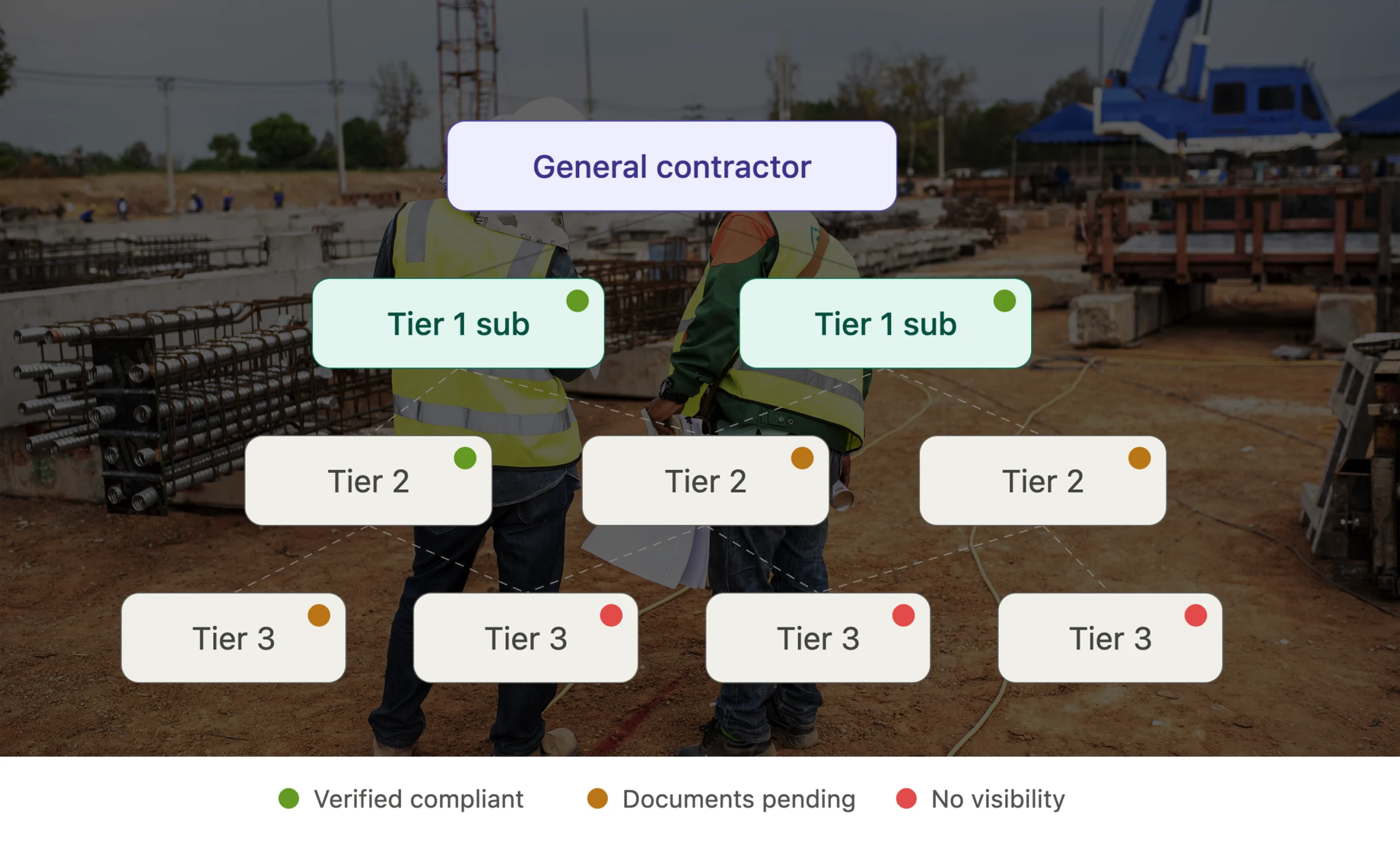
A well-designed contractor prequalification system establishes a defensible baseline aligned with:
- OSHA requirements
- Client safety standards
- Industry benchmarks
- Risk classification
From that baseline:
- Contractors maintain compliance
- Clients monitor performance metrics
- Additional oversight remains proportional to risk
Prequalification addresses contractor selection and baseline validation.
Audits, when applied, should address specific risk drivers, not replace or duplicate prequalification review.
When Contractor Safety Audits Add Value
Contractor audits can provide meaningful value when targeted and applied strategically, including:
- High-hazard work scopes
- Contractors with declining safety metrics
- Missing or incomplete safety programs
- State-mandated audit requirements
- Corporate compliance frameworks
In these cases, a contractor safety audit serves as a focused validation tool.
The issue is not the existence of audits.
The issue is universal application without risk differentiation.
A Risk-Based Approach to Contractor Audits
Effective contractor governance requires balance.
Oversight should:
- Be proportional to risk
- Align with regulatory language
- Support operational clarity
- Avoid duplicating existing prequalification review
Risk-based contractor audits preserve credibility. Automatic audits erode it.
A Practical Option When an Audit Is Warranted
When deeper contractor validation is appropriate, the audit process should integrate with prequalification, not layer redundantly on top of it.
AuditQual by CanQualify was built around this principle.
Rather than defaulting every contractor into recurring audit cycles, AuditQual supports:
- Risk-based audit application
- Alignment with OSHA contractor evaluation requirements
- Clear differentiation between baseline validation and deeper review
- Proportional oversight without unnecessary administrative burden
For safety professionals evaluating contractor audit requirements within their governance strategy, the objective is straightforward:
Validate where risk justifies it.
Avoid duplication where it does not.
That balance strengthens compliance credibility without inflating process.
Frequently Asked Questions About Contractor Safety Audits
Are contractor safety audits required by OSHA?
Federal OSHA requires host employers to obtain and evaluate contractor safety performance information under 29 CFR 1910.119(h)(2)(i). It does not explicitly mandate recurring third-party contractor audits under PSM. State or corporate standards may vary.
Does contractor prequalification satisfy Federal OSHA requirements?
When structured correctly, contractor prequalification can meet the evaluation requirement outlined in OSHA 1910.119(h)(2)(i).
What is the difference between contractor prequalification and a contractor audit?
Prequalification evaluates baseline safety performance and documentation prior to contractor selection. A contractor audit typically involves deeper review or validation beyond initial evaluation.
When should contractor audits be conducted?
Contractor audits are most effective when applied selectively, based on risk level, performance trends, regulatory requirements, or specific client mandates.
Final Perspective
Contractor safety audits remain a legitimate tool within contractor risk management. But like any tool, their value depends on how they are used.
When audits clarify risk and strengthen accountability, they contribute meaningfully to safety governance.
When audits duplicate existing contractor prequalification processes without improving performance, they become administrative overhead.
For safety professionals, the goal is not more oversight.
It’s effective oversight.